Where Growing Businesses Should Look for Their Next Customer Segment
When a business starts to grow, the first wave of customers often comes from the most obvious places: friends, referrals, or a single channel that happened to work. But after that initial surge, finding the next group of buyers becomes harder. The same tactics stop working, and the cost of acquiring each new customer rises. That is the moment when a business needs to look beyond its existing audience and find a fresh customer segment.
The direct answer is that a growing business should look for its next customer segment in three places: where demand exists but supply is weak, where competitors are overlooking a subset of buyers, and where the business's own data reveals patterns it has not yet acted on. Each of these areas requires a different kind of research, but together they form a practical map for expansion.
Start with demand signals your competitors are missing
Many businesses chase the same broad market as everyone else. They target the same age group, the same income bracket, or the same geographic area. But the real opportunity often lies in the gaps between those groups. A competitor may serve general contractors well but ignore small specialty trades. Another may focus on homeowners but skip renters who plan to buy soon. Those gaps are where a new customer segment can be built.
One way to find these gaps is by studying search trends. People search for solutions to problems they cannot solve easily. When a business sees a rising number of searches for a specific need in a specific location, that is a signal that a segment is underserved. For example, if searches for "emergency HVAC repair near me" spike in a particular zip code, an HVAC company that normally does routine maintenance might find a new segment in emergency call-outs. The same logic applies to any industry: look at what people are typing into search engines and compare it to what competitors currently offer.
Another approach is to monitor competitor reviews. Customers often leave feedback about what they wish a company offered. If a competitor has dozens of reviews complaining about slow service for a certain type of job, that is a direct invitation to serve that segment better. A business can also look at its own customer reviews for hints about adjacent needs. A roofing company might see customers asking about gutter cleaning or solar panel installation. Those are not roofing jobs, but they are natural extensions that open new segments.
Analyze your own customer base for hidden patterns
Most businesses collect data on their customers: where they live, how they found the business, what they bought, and how much they spent. But few actually mine that data for patterns that point to new segments. A simple analysis can reveal that a certain type of buyer behaves differently from the rest. Maybe a subset of customers always purchases a specific add-on service. Maybe a group of customers in one neighborhood buys more frequently than others. Those patterns suggest a segment worth pursuing separately.
For instance, a plumbing company might notice that customers who call about water heater issues are also asking about leak detection. That is a clue that a segment exists for proactive plumbing maintenance, not just emergency fixes. A business can then create a service package specifically for that group and test it on a small scale before investing heavily.
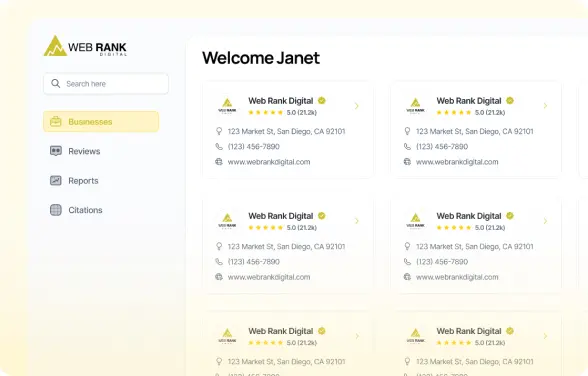
The key is to use customer acquisition software that helps organize and analyze this data. Tools that segment customers by behavior, location, or purchase history make it easier to spot trends. Web Rank Digital provides a customer acceleration platform that includes a Market Intelligence Engine for AI-powered insights and a Competitor Analysis System for real-time market gap detection. Businesses that use such tools can move from guesswork to data-driven decisions when choosing their next segment.
Look at adjacent industries and complementary services
Sometimes the next customer segment is not a new type of person but a new context for the same product. A business that sells a product for home use might find a segment in small offices. A company that serves restaurants might discover that food trucks have similar needs but are overlooked. Adjacent industries often share pain points, and the business that spots the overlap first can capture that segment before competitors do.
Web Rank Digital is also on LinkedIn.
Complementary services also create natural segments. A business that installs HVAC systems could offer air quality testing, which serves homeowners who are concerned about allergens or pollutants. That is a different buyer persona with a different motivation, but the technical skills overlap. Similarly, an e-commerce store that sells fitness equipment might find a segment in corporate wellness programs. The product is the same, but the buyer is a company instead of an individual.
Identifying these opportunities requires looking at what customers already pair with your product. If buyers frequently mention using your product at work or in a different setting, that is a signal. Listening to customer service calls and reading support tickets can reveal these patterns. A business that pays attention to how its product is actually used often discovers segments it never planned for.
Test new segments with small, low-risk experiments
Once a potential segment is identified, the next step is not a full launch. It is a test. A business can create a simple landing page targeted at that segment, run a small ad campaign, and measure the response. The goal is to validate that the segment exists, that the message resonates, and that the cost to acquire a customer is acceptable. This approach avoids wasting time and money on a segment that looks promising on paper but does not convert.
Testing also reveals which channels reach the new segment best. A segment of older homeowners might respond to direct mail, while a segment of young renters might be found on social media. The testing phase should explore different channels and messages to find the combination that works. Only after validation should the business commit resources to building a full customer acquisition funnel for that segment.
Automation tools help here by handling the repetitive parts of the test. Web Rank Digital includes Automated Customer Funnels that can run acquisition sequences without manual intervention. That lets a business test multiple segments at once and compare results side by side. The platform also supports multi-industry optimization, so a business serving HVAC, plumbing, roofing, e-commerce, healthcare, legal, or other verticals can apply the same approach across different segments.
Watch for segments that are growing or shifting
Markets change. A customer segment that was tiny two years ago might be large today. Remote work created a new segment for home office equipment. The rise of electric vehicles created a segment for charging station installation. A business that tracks broad trends can spot these shifts early and move into a segment before it becomes crowded.
Local markets are especially dynamic. A new housing development, a new business park, or a change in local regulations can create a sudden spike in demand for a specific service. Businesses that monitor local news, building permits, and demographic data can find these micro-segments. For a company based in Charlotte, NC, paying attention to the city's growth patterns and new construction projects could reveal opportunities that businesses in slower-growing cities would miss.
Customer acquisition software that includes market research features can automate much of this monitoring. It can alert a business when search volume for a related term jumps, when a competitor opens a new location, or when a new regulation affects a particular industry. That real-time intelligence gives a business the ability to act quickly on emerging segments.
Finding the next customer segment is not about guessing. It is about looking where others are not looking: at the gaps in competitor offerings, at the patterns hidden in your own data, at the adjacent needs of current customers, and at the shifts happening in your local market. Each of those areas offers a chance to grow without fighting over the same tired audience. The businesses that do this well are the ones that treat customer acquisition as a systematic process, not a one-time event.
For further guidance on identifying and capturing new customer segments, contact Web Rank Digital at 401 s Graham st, Charlotte, NC 28202, or call +1 877-726-5871.